Underwritten Like an Apartment Building
Illustrative example. Figures are hypothetical.
The deal
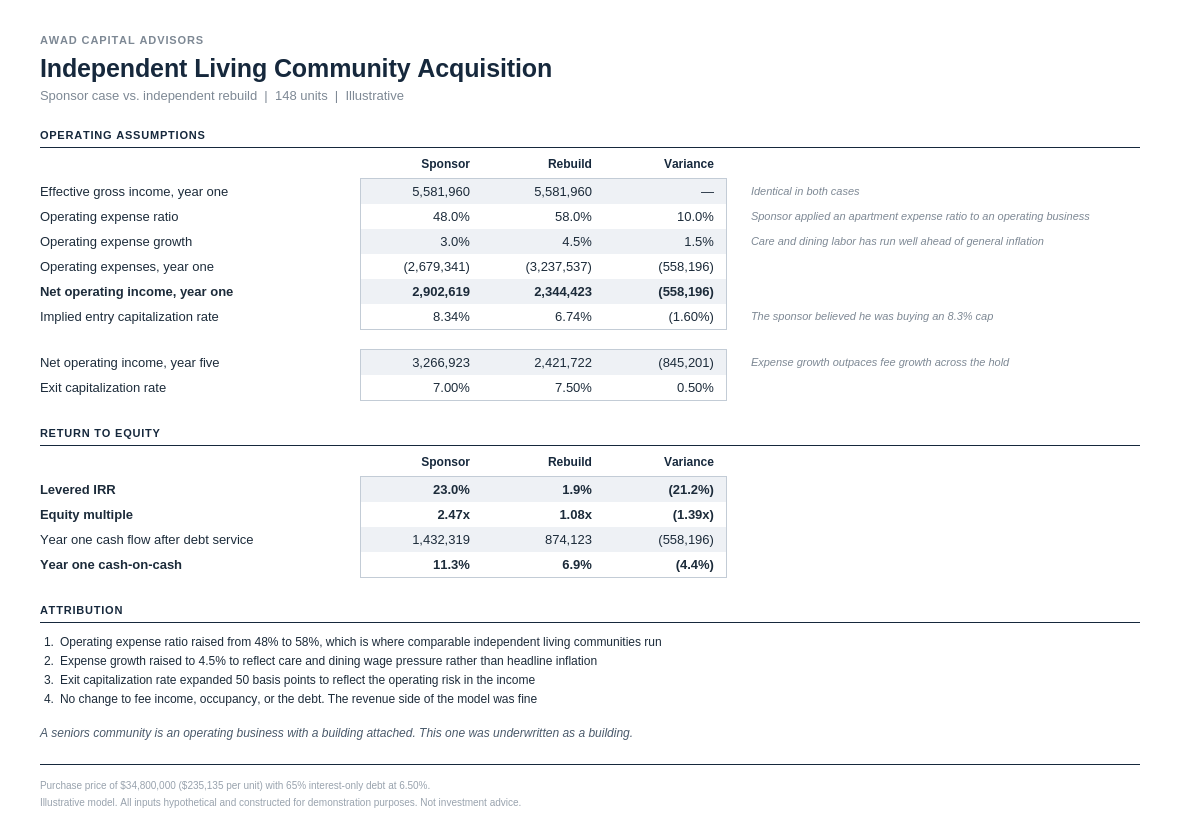
A 148 unit independent living community at $34.8M, about $235,000 a unit, with 65% interest-only debt. The sponsor's model showed a 23% IRR and a 2.47x over five years, and he was treating it as a value buy at an 8.3% cap in a market where stabilized seniors product was trading tighter than that. A prospective LP asked me to look at it.
Where the model went wrong
Nothing wrong with the revenue. Fee income, occupancy, second person fees, all fine and consistent with what the building was actually collecting.
The problem was the expense line. The model ran a 48% operating expense ratio, which is roughly what a well-run apartment building does. An independent living community is not an apartment building. It has a commercial kitchen serving three meals a day, a transportation program, activities staff, 24 hour front desk coverage, and a housekeeping schedule that runs through every unit weekly. Comparable communities run 55% to 60%. I used 58%.
Expense growth had the same problem. The model grew expenses at 3%, the same as the fee income. Care and dining labor has been running well ahead of headline inflation for years, so I used 4.5%, and that gap compounds into most of the difference between the two models by year five.
I also widened the exit cap 50 basis points, because a buyer pricing this asset is pricing an operating business and will underwrite the margin risk the sponsor had underwritten away.
What that does to the return
Year one NOI falls from $2.90M to $2.34M. The 8.3% cap he thought he was buying is a 6.74% cap, which is market, not a bargain. Levered IRR goes from 23.0% to 1.9%, and the multiple from 2.47x to 1.08x.
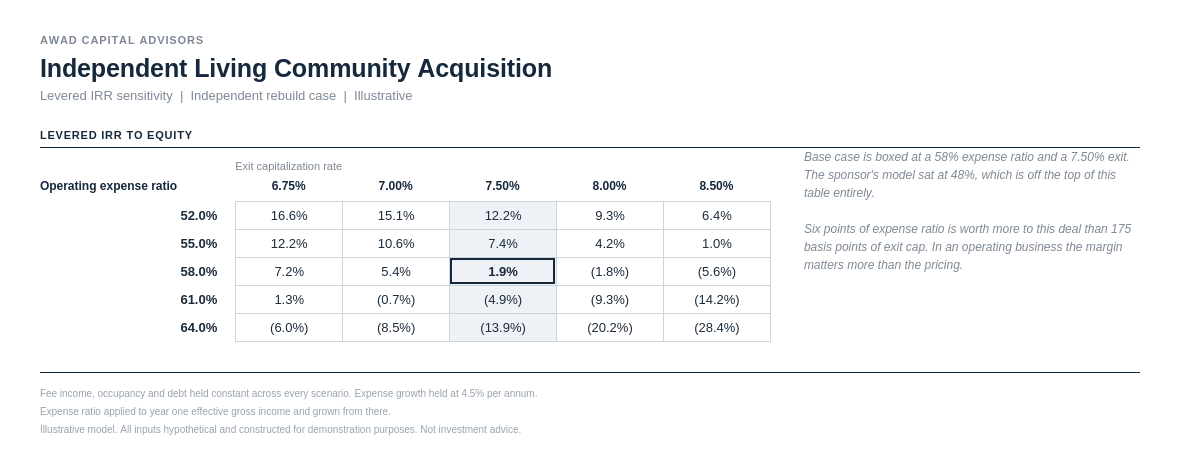
The grid is the part worth looking at. Across expense ratios from 52% to 64% and exit caps from 6.75% to 8.50%, six points of expense ratio moves the return more than 175 basis points of exit cap does. In an operating business the margin matters more than the pricing, and the sponsor's 48% doesn't appear anywhere on the table.
None of this was carelessness. Seniors housing looks like multifamily on a rent roll and behaves like a hospitality business in the P&L, so when the model gets built by someone who underwrites apartments the revenue comes out right and the expenses come out wrong, and nobody notices until the first full year of actuals.