The Ramp Nobody Funded
Illustrative example. Figures are hypothetical.
What the plan assumed
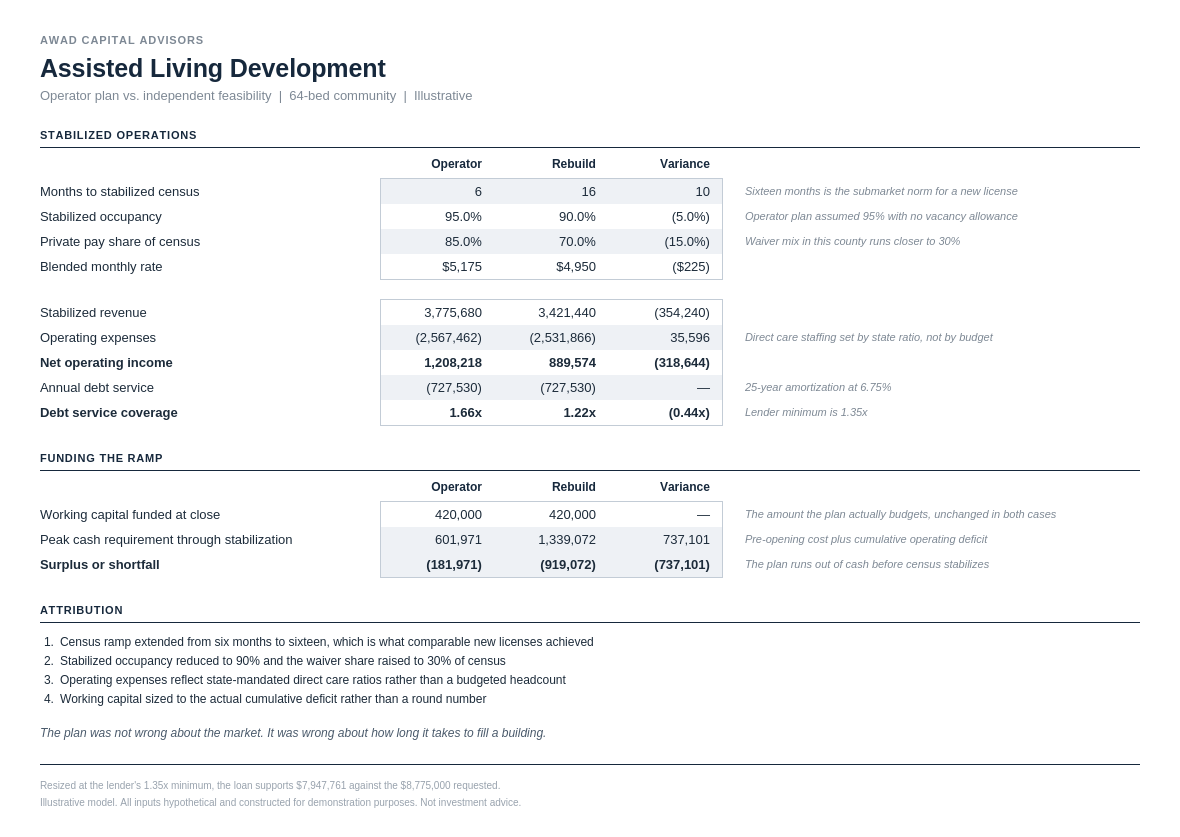
A 64-bed assisted living community, ground-up, with an operator who had run facilities before but never built one. Total project cost was around $11.7M with an $8.8M loan, and they were at the bank with a plan showing 1.66x debt service coverage and a six month fill to 95% occupancy. I was brought in to review the projections before it went to committee.
The revenue side was reasonable. Rates were in line with the submarket and the building was well located. The problem was everything about timing.
Six months to fill a new license is not what happens. Comparable buildings in that market took fourteen to eighteen months, because you can't market a facility that doesn't have a license yet, referral relationships take a year to build, and the first families through the door are the hardest to convince. I used sixteen months. I also dropped stabilized occupancy from 95% to 90%, since a 95% assumption leaves no room for the turnover that's built into this business, and raised the waiver share of census from 15% to 30%, which is closer to what that county actually looks like.
On the expense side, direct care staffing isn't a budget decision, it's set by state ratio, so the headcount moves with census whether the revenue supports it or not. Those changes took stabilized coverage from 1.66x to 1.22x, under the 1.35x the lender required.
The number that mattered
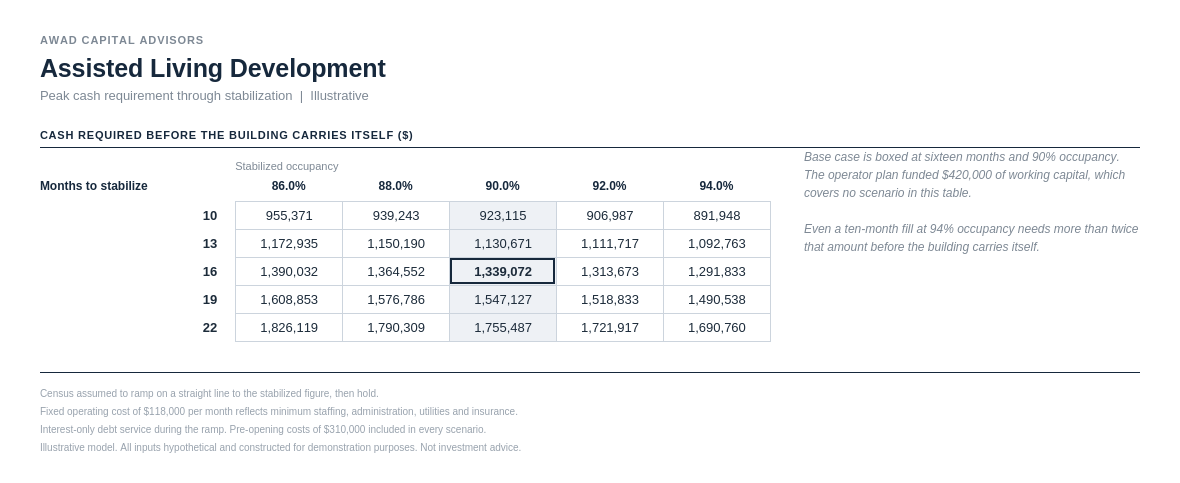
Coverage wasn't really the issue. The building loses money every month until census crosses roughly 48 beds, and on a sixteen month ramp that's thirteen months of negative cash flow while debt service is still due. Cumulatively, including pre-opening costs, the project needed about $1.34M to get to the point where it carried itself. The plan had budgeted $420,000.
Run the grid across every combination of fill speed and stabilized occupancy, and there is no scenario where $420,000 is enough. Even a ten month fill to 94% occupancy, which is better than anyone in that market has done, needs more than twice that.
The operator went back and restructured the raise, funding an operating reserve alongside the construction budget rather than treating working capital as a rounding line.
What feasibility studies usually miss
Most of them get the rent right and the ramp wrong, and the ramp is what kills you. A building that's going to be profitable in year three still has to survive year one, and the loan payment starts long before the census does.